语言/Language
Chapter 6: Hue - Impermanence
"Stone doesn't speak, but stand before it long enough, and it will speak"
2025.8.28 — 8.31
6.1 Perfume River and the Imperial City
August 28, I arrived in Hue.
Finished my run, had dinner, drank a cup of coffee—and then the feeling was right.
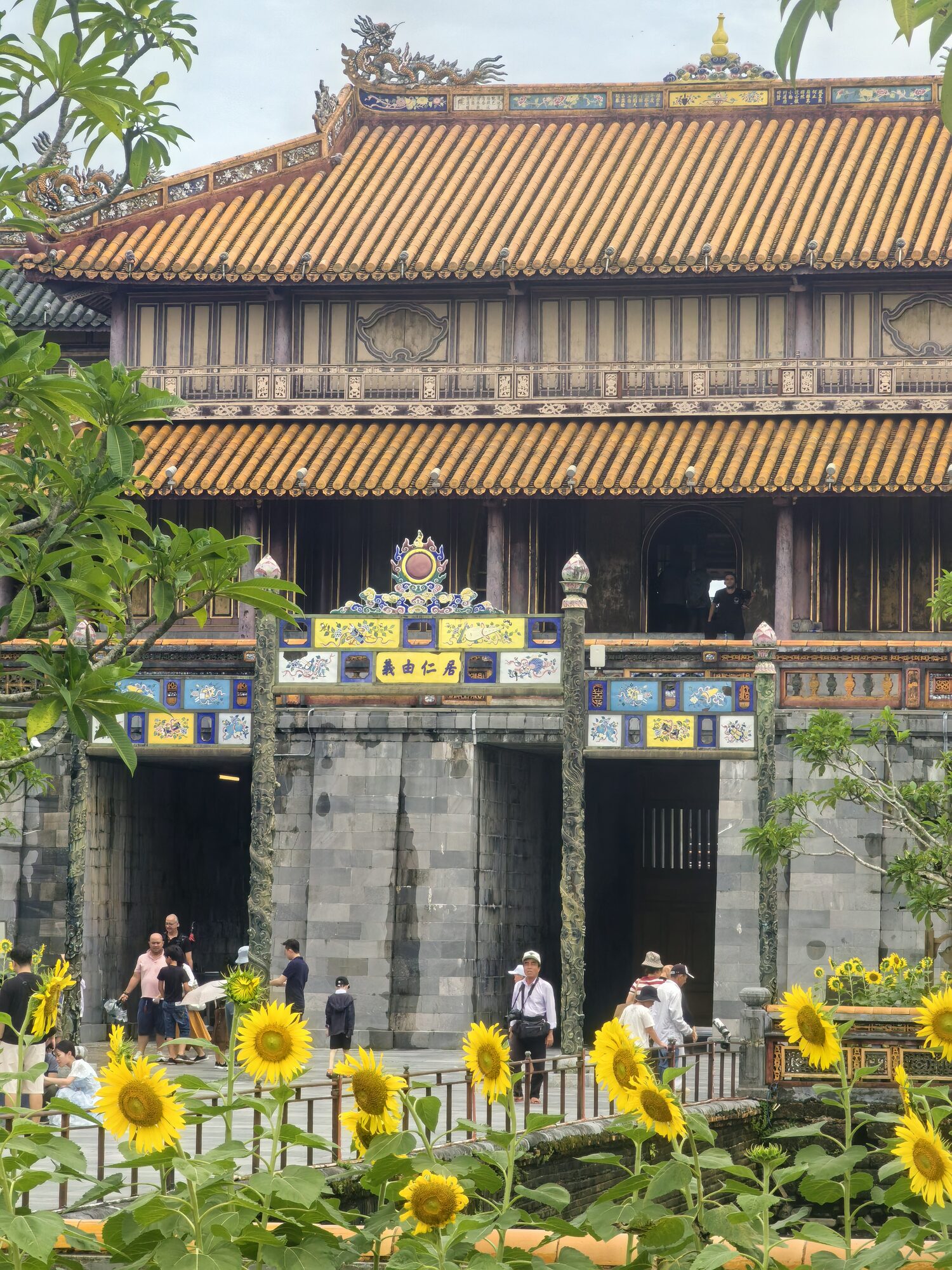
Hue was different from other Vietnamese cities. It had weight, the kind of weight from hundreds of years of history, pressing down in the air. The Perfume River ran through the city, the Imperial City on one side of the river, royal tombs scattered on both banks.
The Nguyen Dynasty Imperial City—Vietnam's Forbidden City. Built in 1802, ended in 1945 with the abdication of the last emperor. In 1968, the Hue Campaign turned the entire Imperial City into a battlefield; to this day, you can still see bullet holes in the walls.
I walked inside for a long time. Not looking at the architecture, just walking.
You can feel hundreds of years of weight pressing there—not solemnity, but a kind of calm silence, as if all the rise and fall, glory and shame have already been spoken, what remains is just stone and grass.
6.2 The Stranger Meditating in the Rain
By a river inside the Imperial City, I saw a foreign man.
He was meditating. For a long time, very focused.
Then it started raining.
He didn't move. Rain fell on him, and he just sat there, as if the rain wasn't something external, but a part of him. He wasn't "resisting the rain"; he was "allowing the rain."
I didn't disturb him. Sat under the eaves, watched him for a long time.
Don't know if he had entered some state, or if in that moment, I was the one who was distracted.
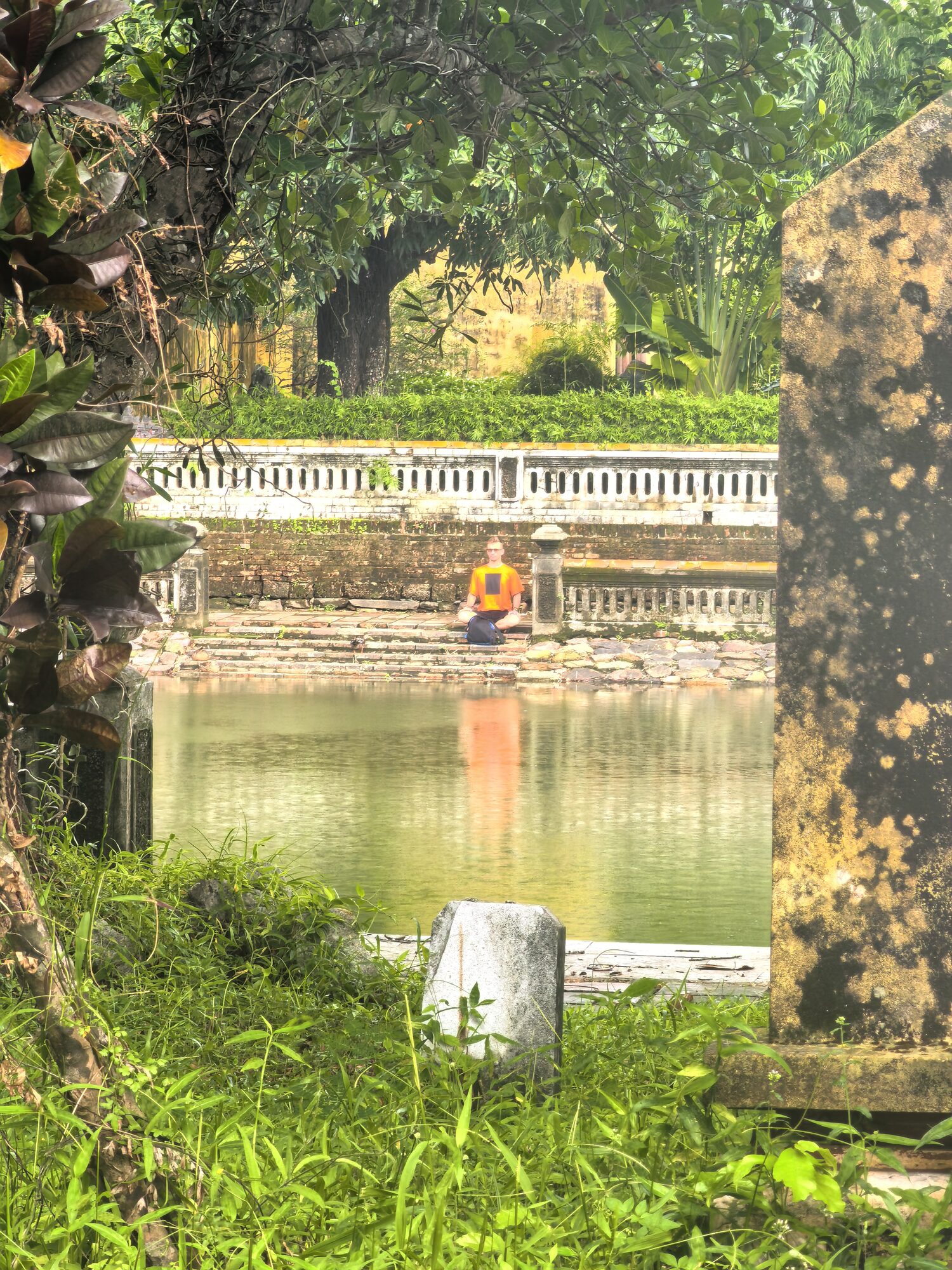
"Rain isn't external; it's a part." I later wrote this sentence in my diary.
Not resisting the rain, but allowing and accepting the rain, river, ancient city, body merging into one—he embodied something in that way that I had only ever read about.
The unity of heaven and humanity isn't a philosophical proposition; it's a state, a state of allowing yourself and your environment to no longer be in opposition.
The problem with the sense of suspension, perhaps, is: I'm in opposition with the system I'm in, rather than allowing it. I don't belong to that order of Tokyo, and haven't yet found my own. So I keep hanging there.
Perhaps "allowing suspension" is itself a choice.
6.3 Abandoned Dragon: The Aesthetics of Mono no Aware
August 31, I went to a cluster of abandoned buildings in the outskirts of Hue.
An abandoned dragon-shaped structure—it was an amusement park back in the day, but due to investment failure and few visitors, it was eventually shut down. Now only the skeleton remains; the concrete dragon body is overgrown with wild grass, paint peeling, steel bars exposed. Next to the abandoned water slide, there are a few sculptures that were meant to express "there's also art and philosophy in the amusement park," now quietly standing in the overgrown weeds.
I stayed there for a long time.
There was an indescribable kind of beauty.
Not that kind of complete, refined, protected beauty, but an aesthetics of mono no aware—things decaying in time, and in this process, their internal structure slowly reveals itself, those bones hidden beneath the surface begin to be seen.
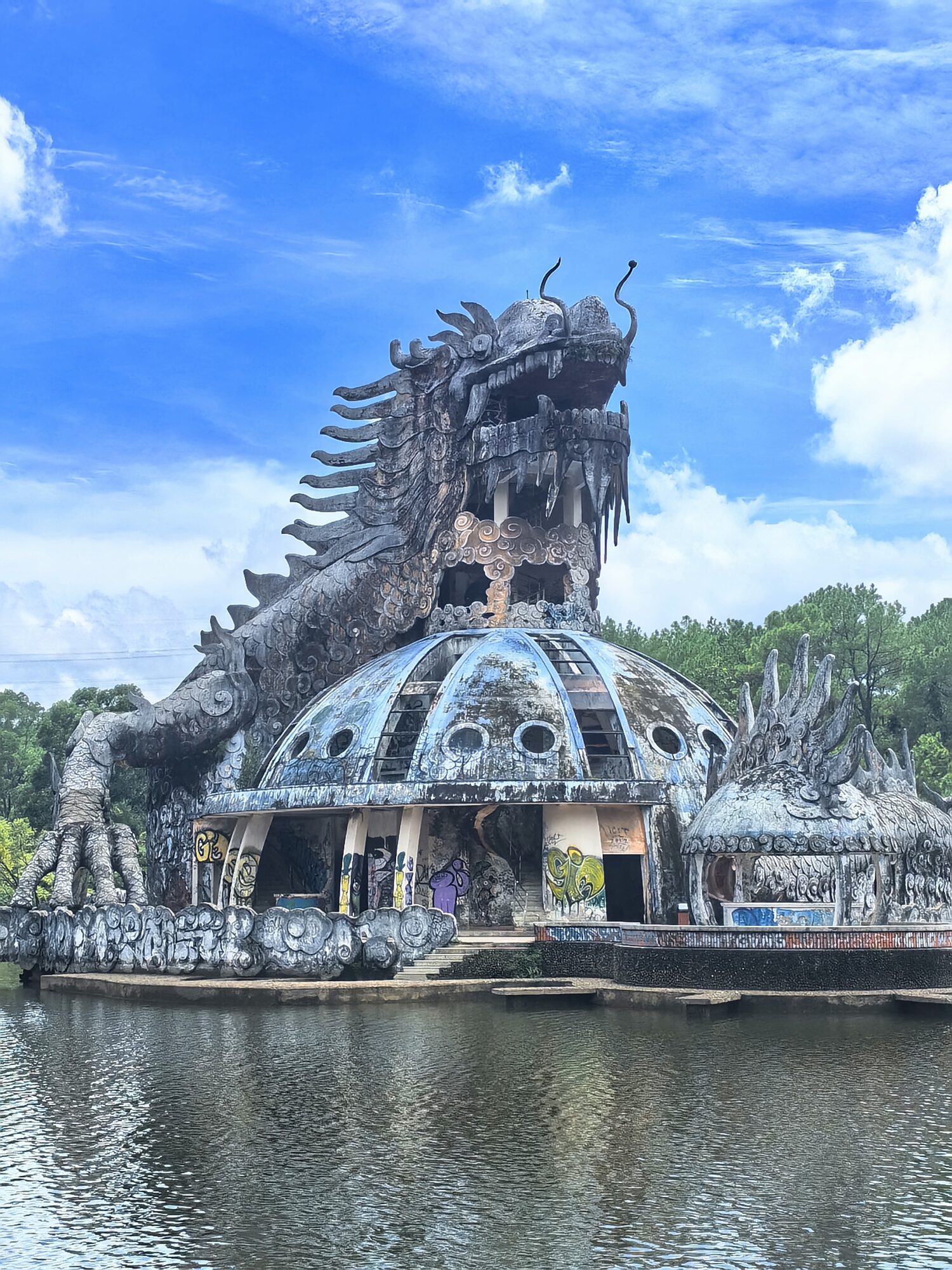
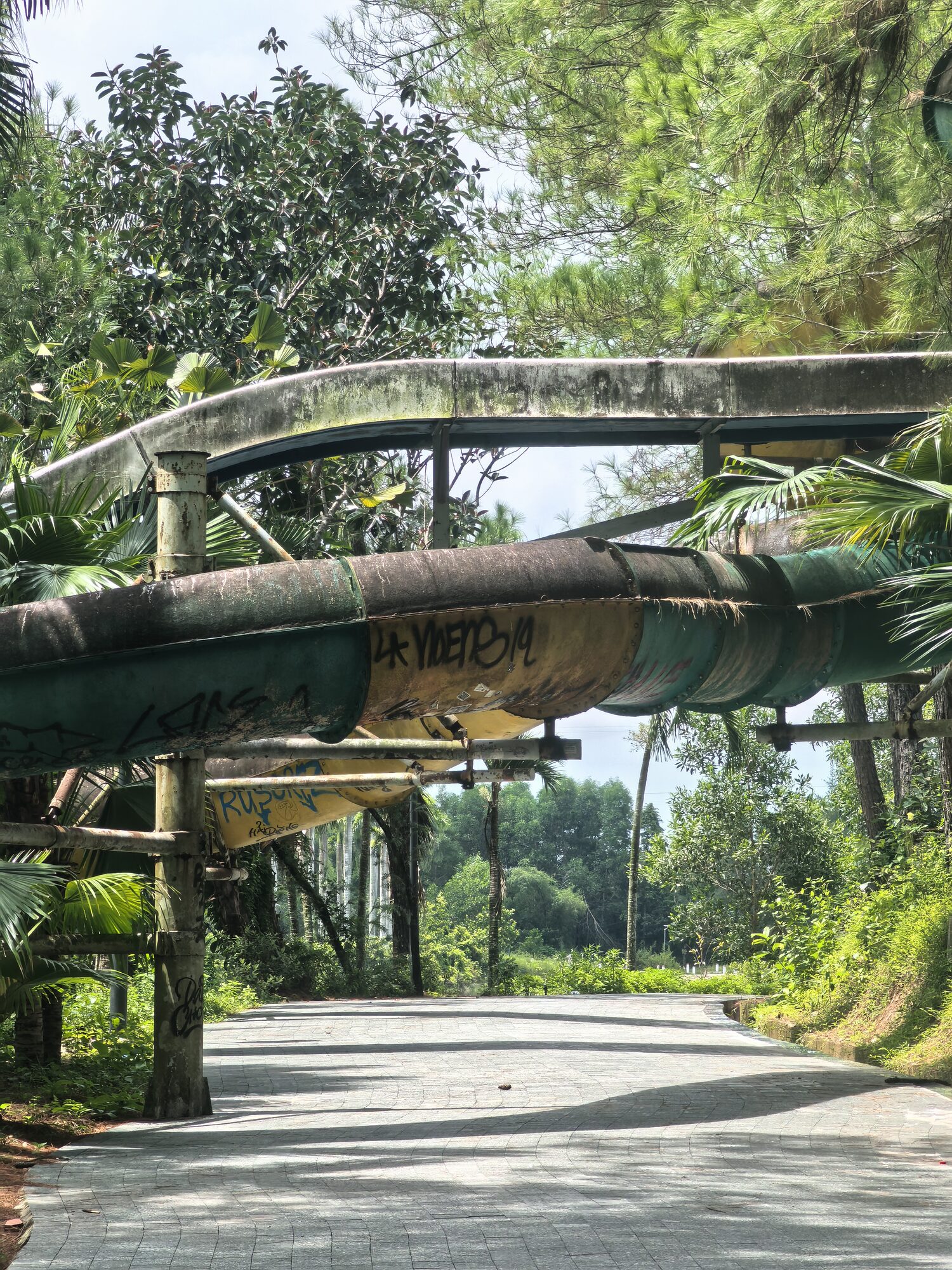
Abandoned things have a kind of honesty.
They no longer try to maintain any image, no longer perform "what I am." They just are, what remains after time.
All prosperity has a limit. All forms will be dissolved by time. What's left in the end is what truly took root.
Hue gave me something rare in this era: a large amount of evidence of "impermanence." The Imperial City is impermanence, bullet holes are impermanence, the abandoned dragon is impermanence, even that stranger meditating in the rain—he disappeared into the depths of the Imperial City, I never saw him again—is also impermanence.
But impermanence isn't a tragedy; it's the truth.