语言/Language
Chapter 4: Hoi An - Presence
"You can skip the museum, can maintain a safe observer stance toward culture. But you cannot not eat"
2025.8.13 — 8.19
4.1 Food: The Most Honest Entry Point
The first meal in Hoi An was bánh mì.
Bánh Mì Phượng—Anthony Bourdain once said it was "the world's best sandwich." The vendor heats the bread on a flat pan, spreads pâté, adds char siu pork, vegetables, drizzles sauce, hands it over. Bread is crispy, filling is substantial, finished standing by the roadside.
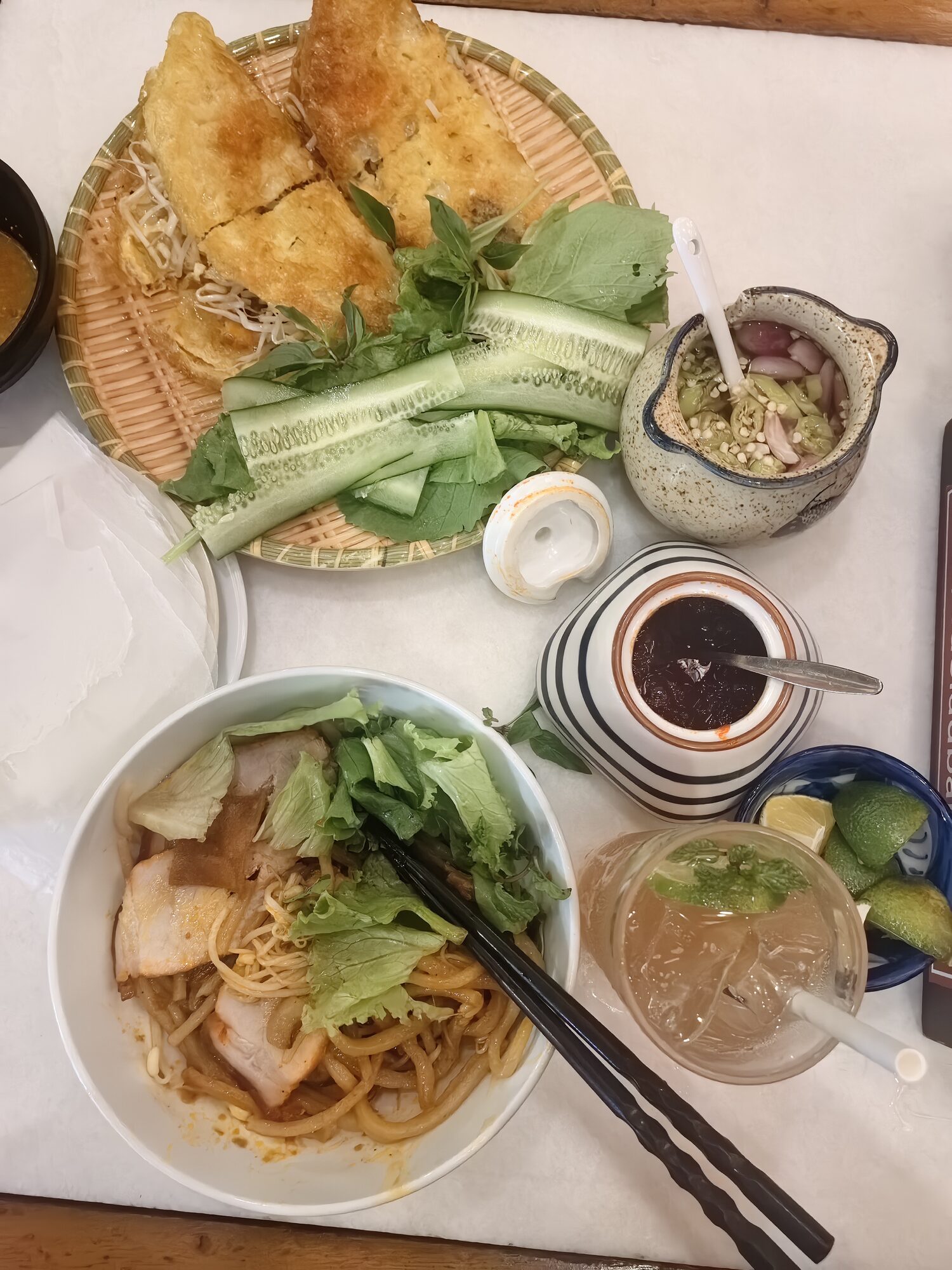
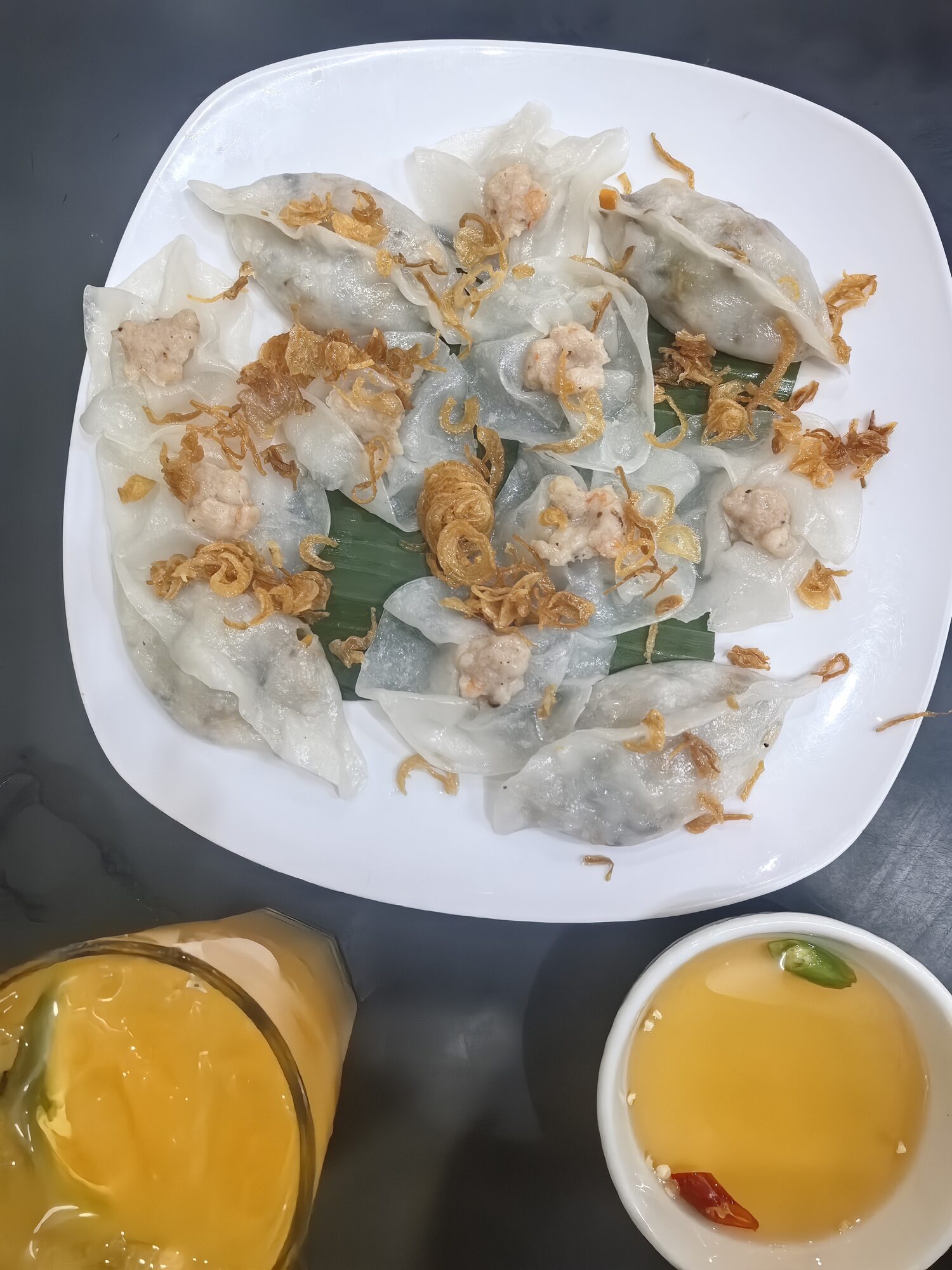
Hoi An in August, 31 degrees, sun is fierce. But there's bánh mì on the roadside, there's Cao Lầu, there's Cơm Tấm, there's White Rose dumplings, there's Bánh Xèo Vietnamese pancakes.
Food here isn't just for eating; it's the DNA of this place.
Pho in the North is clear—beef, scallions, hot broth, nothing extra. By the South it changes, bean sprouts, basil, chili all piled on. Because the North is cold, Pho needs to warm the body; the South is hot, Pho needs to open the appetite. Food is a product of geography, a product of climate, an accumulation of generations of life choices.
You can skip the museum, can maintain a safe observer stance toward culture. But you cannot not eat. You eat the Northern Pho, your body knows it's clear, fresh, warm. These feelings come in without analysis, bypassing all your rational defenses.
Food is the most honest entry point to understanding a place. Because it gives you no option to keep your distance.
4.2 The Commercial Logic of the Lantern City
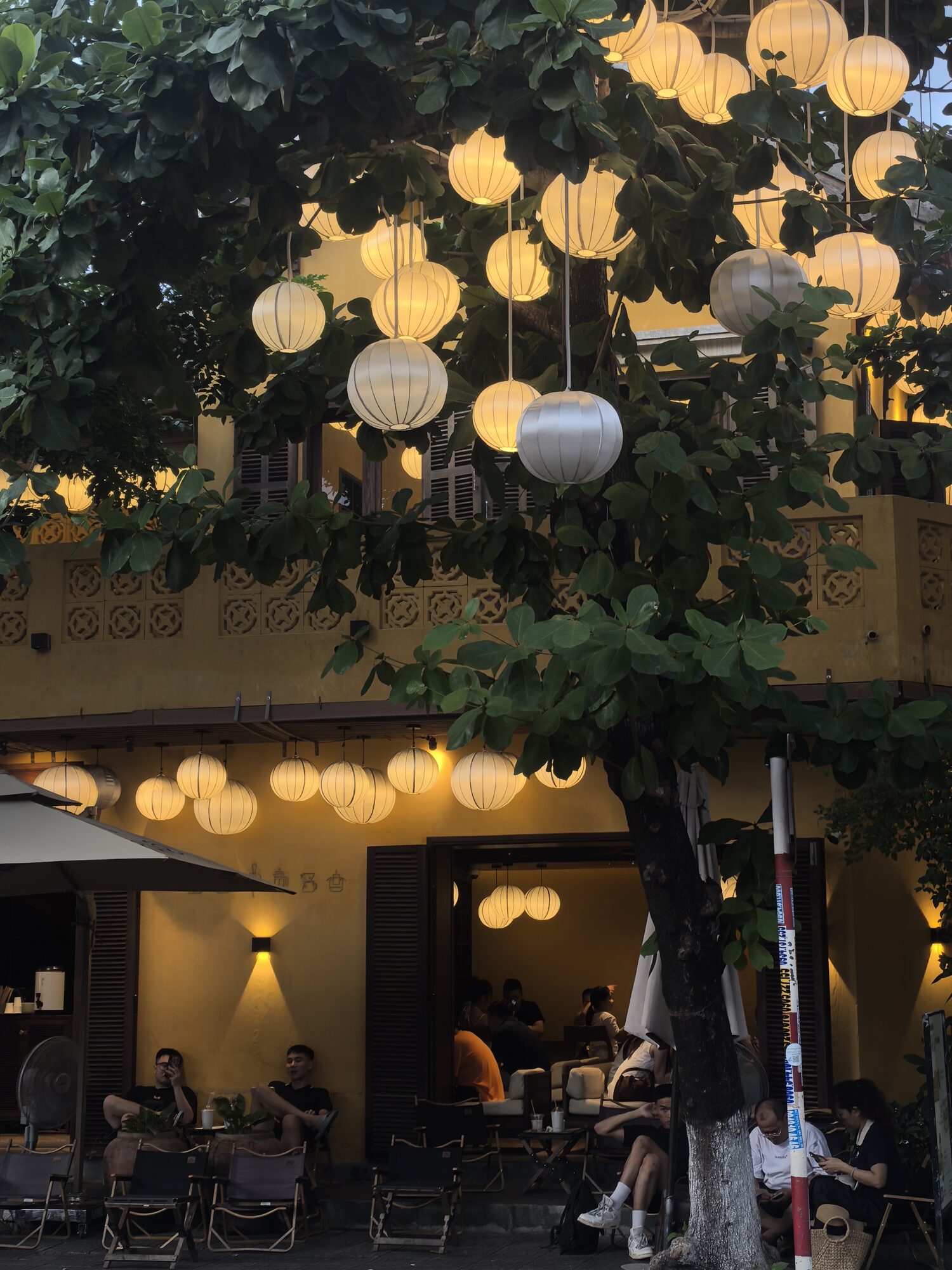
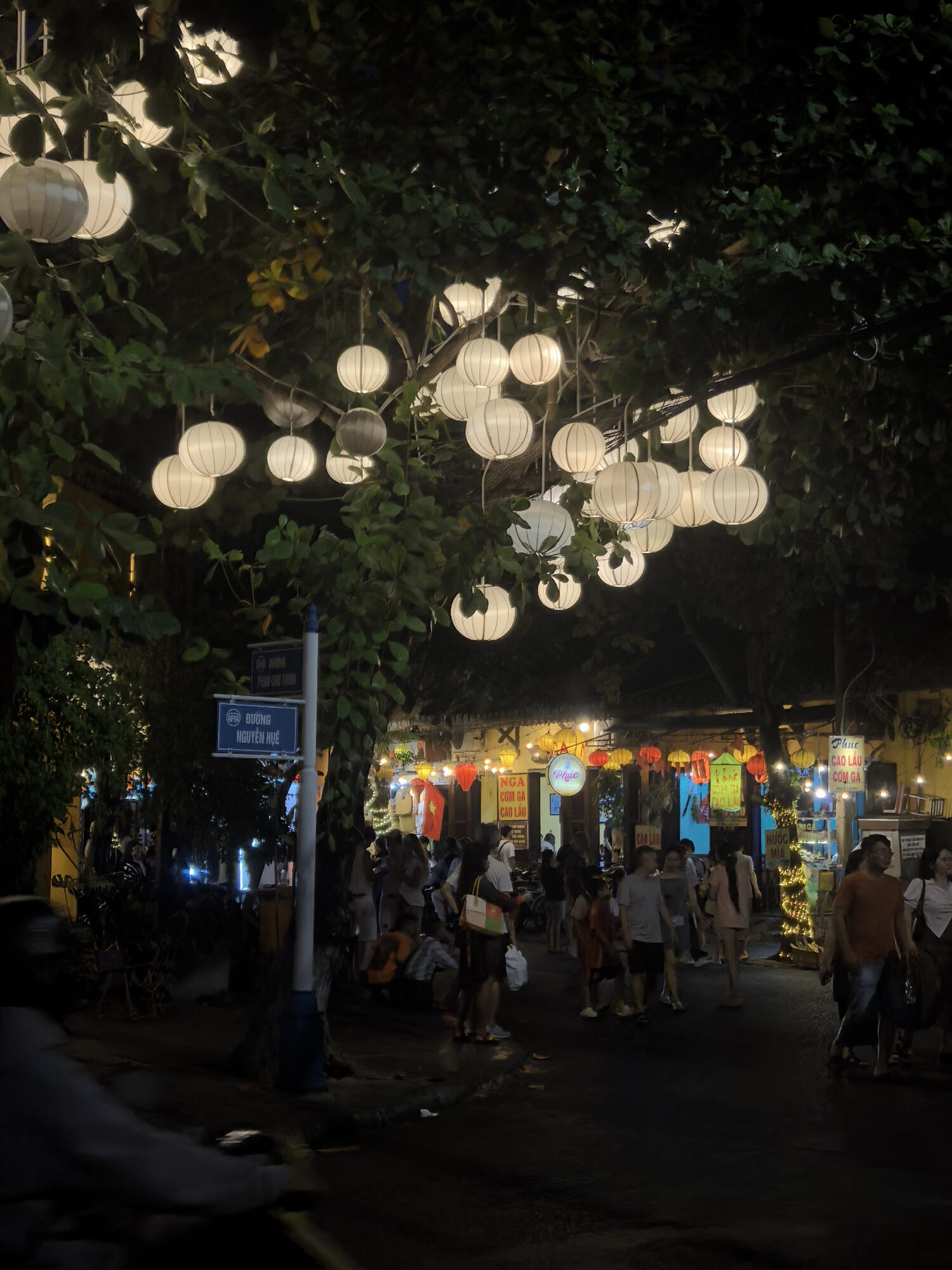
Hoi An Ancient Town's lanterns are managed beauty.
Thousands of colorful lanterns hang between wooden structures, lighting up every night, presenting a carefully designed "sense of time reversal." Tourists line up to take photos, clients would stamp satisfaction on any photo.
But I remembered what a silk shop owner once said.
"Is this locally produced silk?"
"Most of it is imported. Real Vietnamese silk is rare now, cost is too high."
"Then why is it still called 'Hoi An Silk'?"
She smiled: "Tourists like that name."
This isn't deception; it's a tacit understanding.
Tourists know it might not be real, but still buy it—because it's cheap, because "since we're here." Shop owners know it's not real, but still sell it—because it sells well, because everyone does it. This tacit understanding maintains the operation of the tourism economy, while slowly dissolving trust.
The beauty of scenic spots is sometimes a carefully maintained performance. The problem isn't the performance, but whether those watching the performance can see behind the scenes.
4.3 Thu Bon River: The Night That Pierced Through
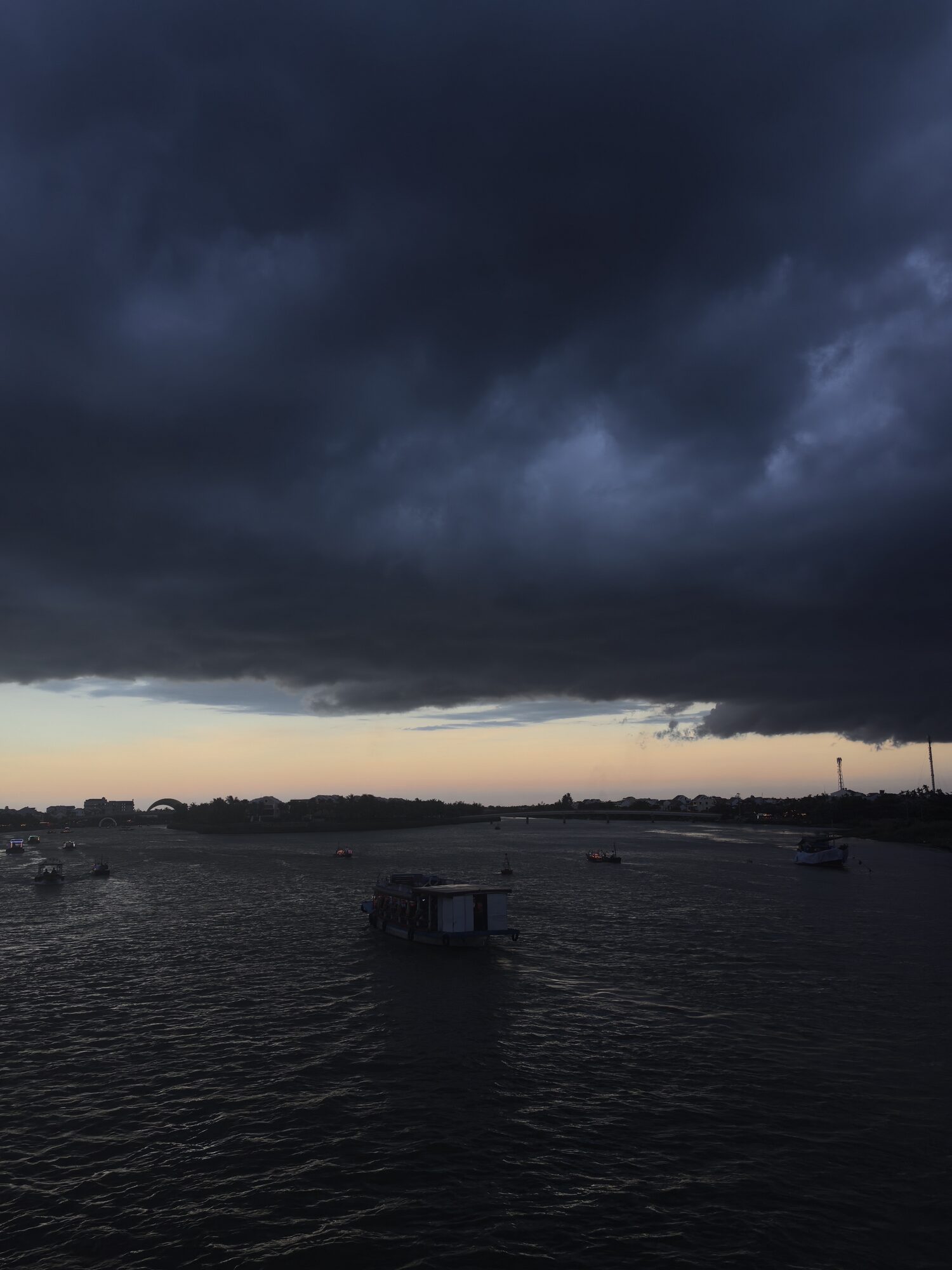
The sixth night in Hoi An, I walked alone to the Thu Bon River.
Not because I wanted to go, but because I didn't know where else to go.
These days my brain had been in observation mode—thinking about commercialization when seeing lanterns, thinking about authenticity issues when seeing tailor shops, labeling everything, analyzing, digesting, recording in notes. I was like an overloaded machine, converting every experience into cognitive output.
At one moment, I suddenly felt very tired. Not physical tiredness, but the kind of tiredness when your brain keeps spinning but your heart never stops.
The river had no lanterns; it was dark.
An old woman, probably in her seventies, walked to the water's edge, squatted down, took several incense sticks from an old cloth bag, lit them, stuck them into the mud by the river. Put her palms together, bowed her head, stood quietly for a while.
No tourists, no cameras, no intention of performance. Just an old woman, at night, by the river, doing something she probably does every day.
My eyes suddenly warmed.
Not sadness. But being pierced through.
I realized that for these six days, I had been standing on the side, never going in. I observed Hoi An, recorded Hoi An, analyzed Hoi An—but I wasn't in Hoi An. I always maintained that "just right distance," the kind of distance that lets you say clever things. That distance keeps you safe, and keeps you absent.
Silence speaks louder than narrative.
The old woman patted her clothes and walked away, didn't look back. I sat by the river alone, sat for a long time.

4.4 Cao Lầu Restaurant: Very Spicy?
A few days earlier, I had my first Cao Lầu at a restaurant in Hoi An, then went back again.
Not because the food was particularly good, but for some reason, I just wanted to go back.
The second time I walked in, the server—a local girl, probably in her mid-twenties—saw me and smiled:
"You came back."
Just that sentence. Nothing else. But in that moment, something loosened a bit.
I sat by the window, ordered the same thing, looked out the window.
On one side was the tourist area's lights—carefully polished shop windows, hanging lanterns, for people to stop, take photos, consume; on the other side, just a few steps away, the real streets of locals, old roads, motorbikes weaving through, people squatting at doorways eating, mixed with much indescribable hardship and calm.
Two worlds, only a window between them.
I sat and watched, thinking about nothing, or thinking about a lot, couldn't remember. Then noticed my eyes were a bit wet.
The server passed by, saw it, stopped in surprise:
"Very spicy?"
I said: No.
Then didn't know how to explain. Not sad. But suddenly realizing that she and I, and those ordinary living people across the street, stand on the same ground. None complete, all have their own indescribable weight.
Before, when thinking of people in difficult situations, there was a kind of pity in my heart—looking from a safe distance, feeling bad, but essentially, you're a bystander. That day was different. Not pity, but compassion.
Compassion isn't looking down from above; it's looking eye to eye—you discover that you and the other person are essentially the same kind of fragile life.
Pushed the baseball cap down a bit, paid, walked out.
The street outside was as usual.

4.5 The Girl with Tattoos
Ho Chi Minh, outside a convenience store, at night.
I came out to buy something, passed a girl standing by the roadside smoking. Covered in tattoos, dark patterns extending from neck to arms.
I subconsciously walked around her. Not intentional, but a very fast, automatic reaction—"this person looks trouble."
Then a little boy walked by, eight or nine years old, clothes very old, rummaging through a trash can for empty bottles.
That girl looked at him, put out her cigarette, walked over, pulled him into the convenience store. When they came out, the boy had a bottle of drink and a pack of snacks in his hand.
The girl turned and continued walking, didn't look back.
I stood in place, thought for a long time.
She was the one who "should have been suspected," yet did that action. That judgment I made when walking around her—was it intuition or bias? The answer was bias—I used a set of external symbol systems to categorize her as "dangerous," then that system was completely broken by her herself.
What made me more uneasy was: if an AI system were judging, it would give her a "high risk score" based on her appearance. Algorithms are based on historical data and statistical patterns. But that girl did something that "didn't match her statistical characteristics."
Humans have an ability: to do things that don't match your portrait. You can break others' predictions of you, and you can break your own predictions of yourself.
This ability is hard for algorithms to replicate.
A few days later, Nha Trang, also at night, also a convenience store.
Another girl with tattoos, early twenties, dark patterns from neck to collarbone to left arm. She was holding a little boy, three or four years old, the boy's head leaning on her shoulder, almost asleep.
She walked to the cooler, took a drink, then took a small snack, broke it in half and handed it to the boy. The boy bit it vaguely, continued sleeping.
Throughout, she didn't look at me. Two minutes.
I stayed there for a long time.
Not because of the tattoos. But the sense of completeness on her. She didn't need to be understood, didn't need to be judged, didn't need to explain to anyone who she was. She existed in those two minutes, that existence was complete.
This was the quietest lesson I had in Vietnam.